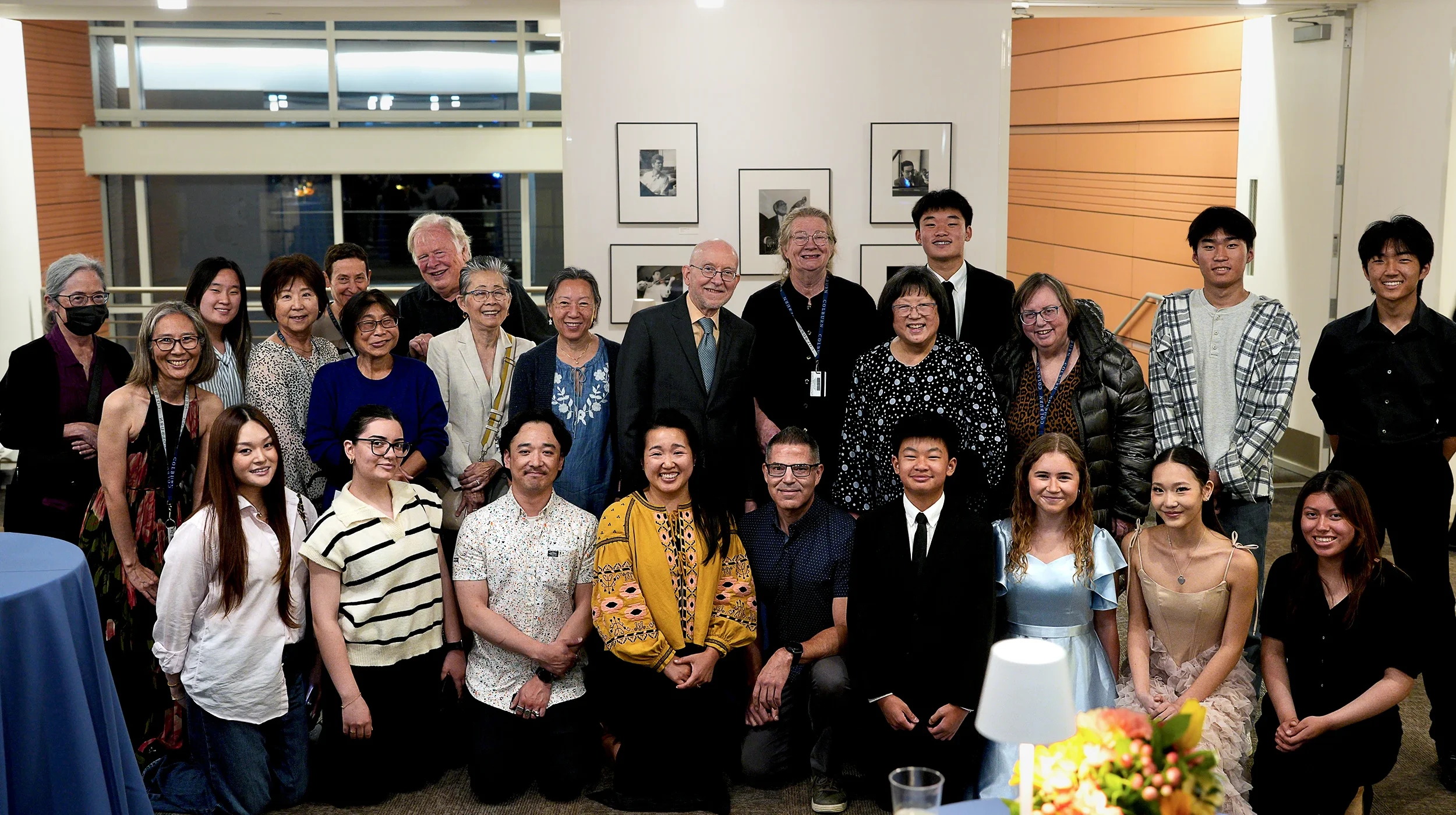
In early May, Colburn Community School of Performing Arts violin faculty member Richard Schwabe hosted his final studio recital. These events have always been one of his favorite student performances throughout his teaching career; but this year, it was made extra special. Not only was it his last since announcing his retirement at the end of the school year, but also because several former students and many of his Colburn colleagues attended. What’s more, Schwabe received stacks of letters from former students congratulating him on a 50-plus-year teaching career, nearly all of which has been conducted at the Community School.
“As a violin teacher, you think seeing students for maybe one hour a week doesn’t seem like much, but that could be one of the only situations where they are meeting with a teacher one-on-one, which can last over many years. That’s a tremendous amount of influence on a student, and therefore, a huge responsibility as a teacher,” says Schwabe. “So the fact that I’m hearing from so many former students now is very gratifying.”
Growing with Colburn
Schwabe’s association with the School dates back to its early years. In 1959, at age nine, his parents enrolled him in violin classes at the preparatory school located on the University of Southern California (USC) campus, where his father, also a music teacher, attended graduate school. Schwabe studied there until his teen years, but returned later to attend USC as a music major. Upon graduation, he accepted a public school teaching job and returned to the USC Community School of Performing Arts—formerly called the preparatory school—on a part-time basis. Schwabe maintained this relationship until leaving for the University of Michigan to earn his Master of Music degree in the mid 1970s.
Right around the time Richard D. Colburn became the school’s benefactor, Schwabe was contacted by administrators with an offer he couldn’t turn down.
“While I was at Michigan, I received a call from the School asking if I would be interested in coming back full-time and chairing the Strings department,” he recalls. “It didn’t take me too long to decide that’s what I wanted to do. I had a great deal of respect for the people working there, and I thought it was an opportunity for personal growth. So I came back to Los Angeles and started at the School full-time in 1980.”
That history makes Schwabe one of Colburn’s longest-tenured faculty members to date.
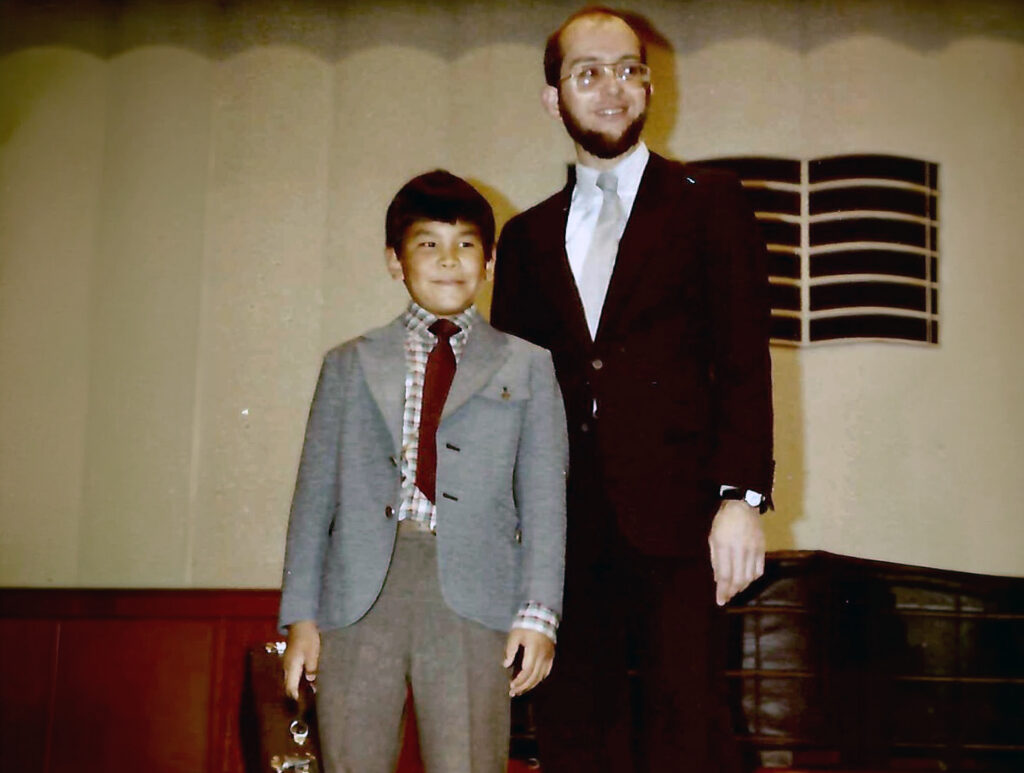 Richard Schwabe with student Kevin Chen, circa 1984
In the Classroom and Beyond
For the past 46 years, Schwabe has taught countless students, starting with those who never picked up a violin all the way through their high school years. Thanks to his tutelage, many aspiring violinists chose to pursue music majors in college and seek out performing careers.
“Also, many of Rick’s students went on to be doctors, lawyers, and educators like him. Their life’s work is not music, but because of him, music became a part of their life,” says Toby Mayman, Colburn Honorary Director and former executive director.
As chair of the Strings department until 2019, Schwabe was instrumental in growing its faculty as the School grew, including expanding the Suzuki Strings program.
“He helped create something that he felt very strongly about,” says Joseph Thayer, former dean and executive director of the Colburn School. “He wasn’t about to sign off on faculty members who he didn’t think met the requirements of the School.”
“Rick also established an opera club, so students could have entree to yet another art form,” Mayman says. “And it helped form a lovely relationship between Colburn and the LA Opera.”
At one point, Schwabe also assumed leadership of the Friday Night Recitals series.
“That gave me a window into the teaching at the School that very few people had. I was able to see the progress of students, not just string students,” says Schwabe. “Personally, I learned a heck of a lot about piano literature, and it was a lot of fun.”
But his biggest influence at Colburn has been Schwabe’s approach to teaching.
“Rick really represents everything that the School stands for in its mission to offer excellence in a performing arts education to all who sought it,” says Thayer. “He teaches a love for learning and a love for the arts.”
“Being a teacher, I am capable of giving students substantive foundational skills to be able to play the violin really well. Once you’ve done that, the self-motivation kind of kicks in,” Schwabe comments. “The student realizes, ‘You know, I actually sound pretty good. I have the ability to do this new piece, I’m getting more advanced, and I’m enjoying the process.’
“The main thing for me, however, has been to look at the entire child, including their life outside of the violin because it impacts what they’re doing on the violin,” he adds. “I think it’s very important to see the whole individual.”
“Making a difference in life in any community is not an easy thing, but Rick has made a huge difference to so many lives,” notes Mayman.
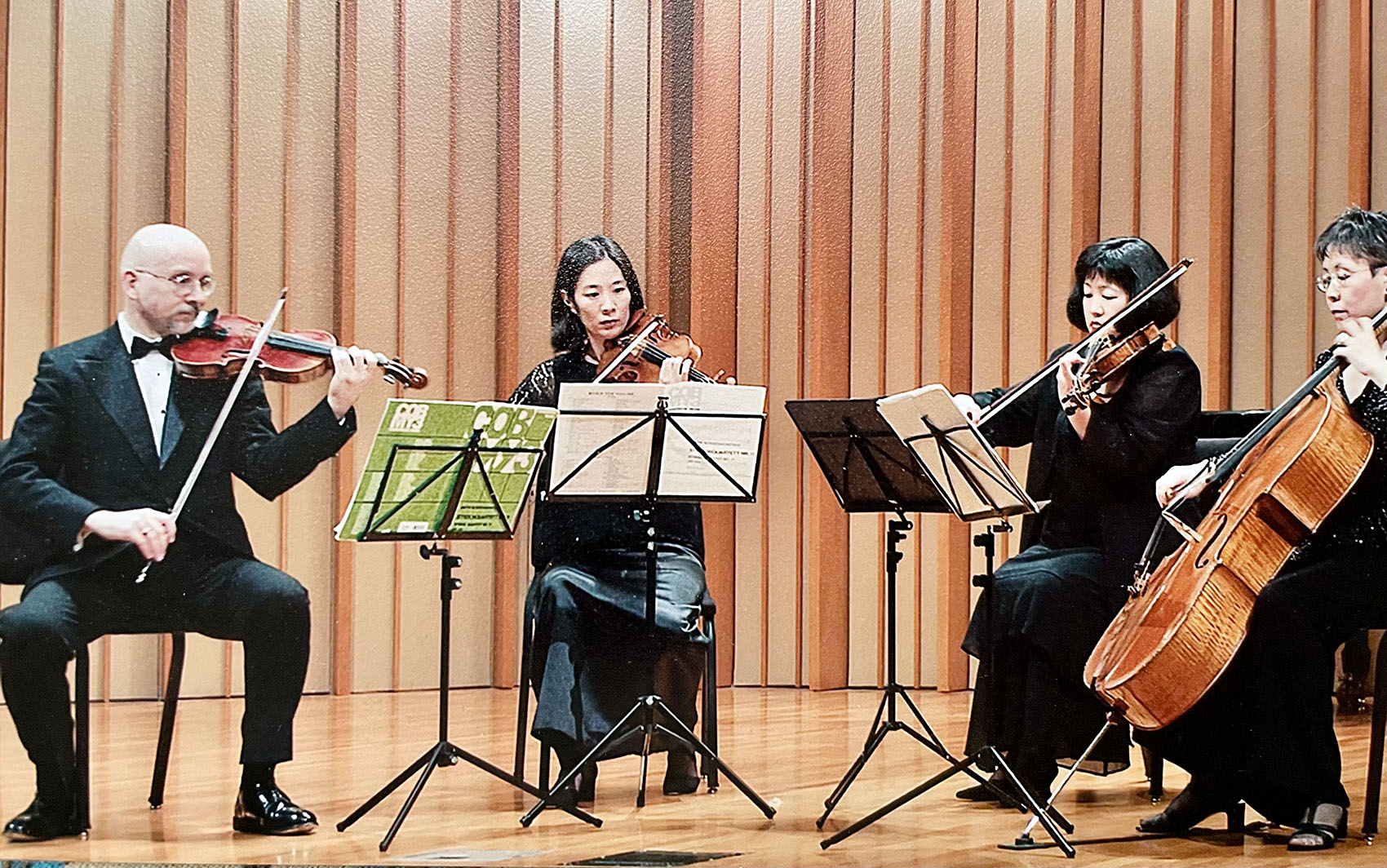 Marina Ensemble: Colburn faculty Richard Schwabe, violin; Rumi Shimasaki, violin; Margaret Shimizu, violin; Nancy Yamagata, cello
New Musical Roots
After dedicating five decades to teaching young violinists, Schwabe has switched his focus to performing. He’s signed up with the award-winning, all-volunteer Oakland Civic Orchestra and hosts chamber music events in his home.
“I’m enjoying playing again, which I didn’t have time to do much of all those years,” he admits.
But Schwabe insists his association with Colburn isn’t over just yet.
“I’m anxious to see and hear students perform in the new Terri and Jerry Kohl Hall, and I’ll be visiting frequently,” he promises.