“Any child who is properly trained can develop musical ability just as all children develop the ability to speak their mother tongue.”
―Dr. Shinichi Suzuki
Oftentimes, music is referred to as a universal language, bringing together people regardless of the language they speak. Dr. Shinichi Suzuki, a violinist and educator, also believed music can be learned similarly to how the spoken word becomes second nature.
When Suzuki began teaching in the 1930s, he observed how children absorbed critical information about sounds and structure of a shared language from listening to others. After World War II, he delved further into his thesis and devised a teaching approach that combines a technical foundation of musical skills with daily listening so students absorb the sounds and structure of music even before learning to read notes on a staff. Add in private instruction based on sequential learning with group or ensemble participation as well as parental involvement and you have what’s become universally known as the Suzuki Method.
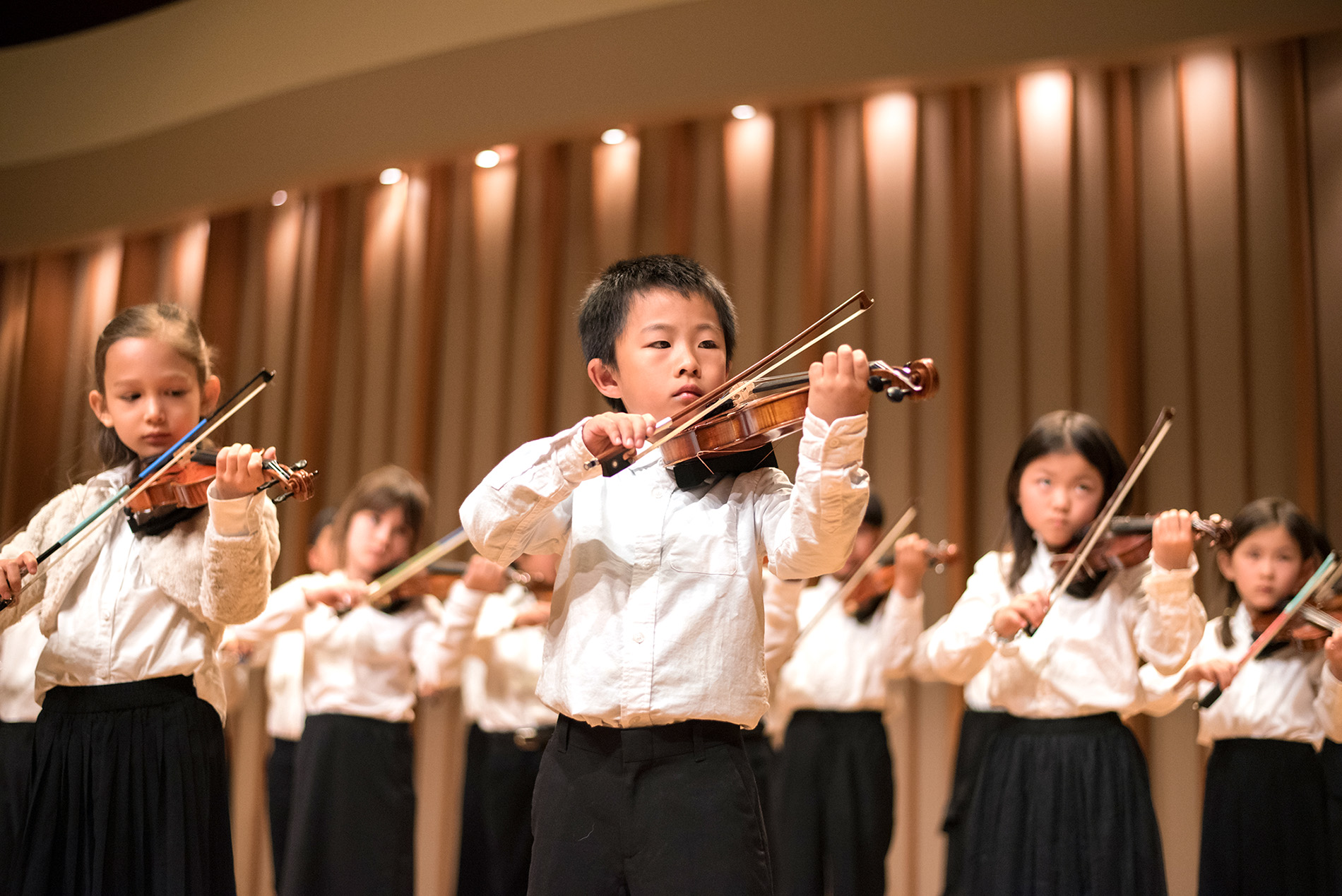
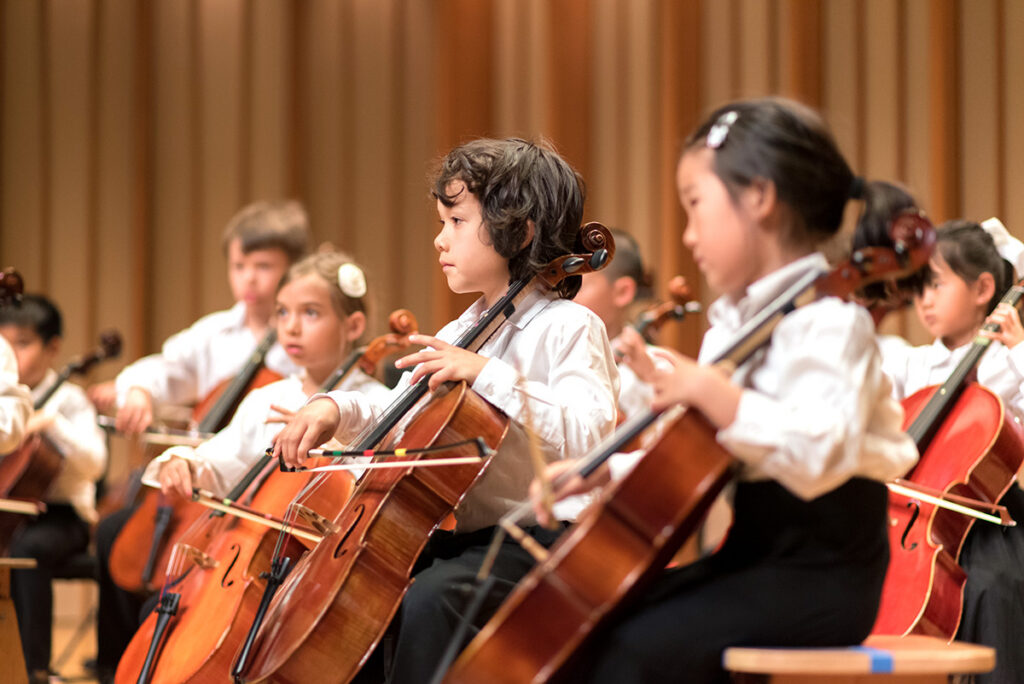
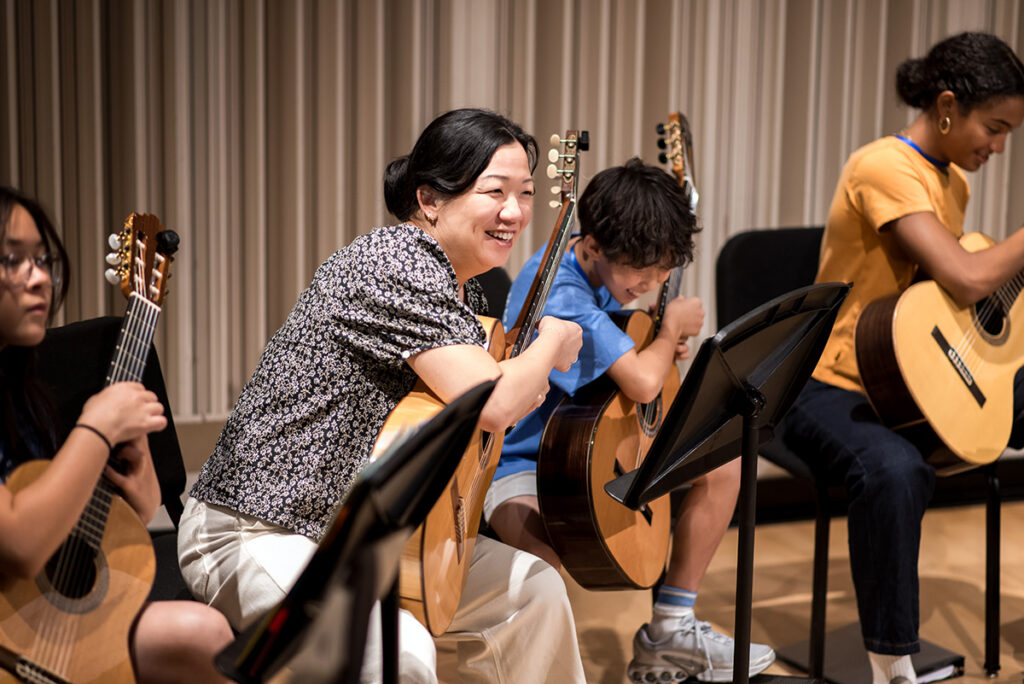
The Colburn Community School of Performing Arts has long offered Suzuki instruction for violin, cello, and guitar, and offers classes for students as young as four years old. A key to the program’s longstanding success is our highly trained Suzuki faculty. We asked a few instructors―Dr. Connie Sheu, guitar; Rumi Shimasaki, violin; Nancy Yamagata, cello; and Margaret Shimizu, violin―to expound on why this style of instruction endures and delivers unique experiences for students and parents.
“The ear-training alone from Suzuki has helped my son pick up several instruments throughout elementary school and middle school like a breeze (trumpet, trombone, sax, classical guitar, double bass).”
―Courtney Fitzgerald
What stands out about teaching the Suzuki Method?
Yamagata: I was attracted to the method because it seemed to be a very organized way of teaching very young children. I’ve really grown to appreciate how the system works and how successful it has been. I especially like the non-competitive and supportive nature of Suzuki education. It’s rewarding to observe how our students are thriving and developing into well-rounded individuals with a deep appreciation for the arts.
Shimasaki: Dr. Suzuki believed that man was the son of his environment, and that’s really what we’re creating here. We’re cultivating an environment for learning and shaping each child’s inherent musical ability and character. They’re learning technique through pieces like “Twinkle, Twinkle Little Star” and not just playing repetitive exercises. Also, one of the things I love most about the Suzuki Method and our program is the community it creates for families.
“Learning alongside and practicing with my child has been a precious time to connect with him and make lifelong memories. We’ve gone through the excitement of starting a new instrument, the challenge of attempting advanced pieces, and the nervous energy of playing onstage; and the best part is that we’ve experienced all of that together.”
―Jack Zerrudo
Is parent involvement a distinguishing factor of this method?
Yamagata: The Suzuki Triangle—teacher/student/parent—is an important cornerstone of the Suzuki Method. The parent’s role is equally as important as the teacher’s role. The parent is responsible for creating the musical environment at home, which includes the daily listening of the core materials.
Shimizu: Parental support is key. Our goal is to help each child and their parents succeed by breaking things down in small attainable steps. Establishing a daily practice routine is essential. The parent must learn to be creative while honoring the private teacher’s instructions. Enjoying the process is rewarding. It’s a musical journey!
“The private lessons, group classes, and studio recitals provide multiple avenues for Sienna to hone her technical and performance skills. She has many outstanding opportunities to interface with experienced musicians in the program and see the value of their long-term commitment to their instrument.”
―Tracey John-Lewis
How important are the group performances to the Suzuki style of learning?
Sheu: The group element is what I think gives the program its spark. I see a lot of growth happen from the kids watching their peers on either end of the age spectrum, and that’s way more effective for motivating them to be present in the program than just having teachers around.
Yamagata: We hope our students will audition and get into some sort of orchestra or ensemble, whether it’s at Colburn, in their own community, or other youth groups. I think they crave that communal experience of making music together and being with other children who are doing similar things. That’s one of the strengths of the method.
“The Suzuki program offered my daughter and family a nurturing and supportive environment filled with performance opportunities. From the very beginning, she had the chance to perform in Zipper Hall and other beautiful spaces on the Colburn campus. The experienced, caring, and dedicated artist-faculty created a sense of community among families and students while fostering lifelong skills and the highest standard of musical and technical training. The program truly gave our daughter a remarkable musical foundation and instilled in her a love of performance and learning.”
―Sel Kardan, Colburn President and former Suzuki parent
What do you most appreciate about the Suzuki Strings program at the Colburn School?
Sheu: Our facilities really stand out. I don’t know any other young kids who’ve played in a venue like Zipper Hall from when they were 5 years old. I think hearing the acoustics and feeling the professionalism is a real draw for people.
Shimasaki: The School has always brought in teachers and artists for master classes, but a lot of times these are for the more advanced students. More recently, with the School’s support, we’ve been able to bring in Suzuki specialists so our younger students can participate in and experience master classes as well.
Shimizu: These clinicians also work with our students in a group class setting and give enrichment classes for the faculty, which provide inspiration, motivation, and education to the students, parents, and teachers.
What else would you like students, parents, and others to know about the Suzuki Method and Colburn School?
Shimasaki: I always tell people, once a Suzuki student, always a Suzuki student, because that’s where your foundation lies; you’re always listening to the pieces you’re currently studying, so essentially, that’s still Suzuki.
Sheu: Dr. Suzuki had all of these ideas of how music could make you a more noble person and it basically betters humanity to study this art form. That’s just a really beautiful way to look at what we do.
For more information, check out these FAQs about Colburn’s Suzuki Strings program.